
Whey protein starts as a byproduct of cheesemaking — it’s the liquid left over after milk is curdled. Whatever the cow ate, and whatever was or wasn’t injected into her, carries through into that whey. “Grass-fed” describes the cow’s diet, and it doesn’t by itself say anything about hormones — that’s a separate claim, covered below — or about how the whey was later filtered into a concentrate or isolate. A product can be grass-fed and still be a low-purity concentrate, or hormone-free and still heavily processed. They’re independent claims, and a comparison site owes its readers that distinction rather than treating “grass-fed” as a stand-in for “better” across the board.
What “grass-fed” actually means for a protein powder
“Grass-fed” describes the cow’s diet: pasture and grass rather than a grain-heavy feedlot ration. It’s a claim about what the animal ate, made before the milk is ever turned into whey — it doesn’t describe the filtration method used afterward, and it doesn’t on its own guarantee a high-purity isolate. Both concentrates and isolates can be made from grass-fed milk.
What “rBGH-free” actually means
rBGH (recombinant bovine growth hormone, also sold as rBST) is a synthetic hormone some dairy operations inject into cows to increase milk yield. It’s banned in the EU, Canada, and several other countries, and remains legal but increasingly uncommon in the US. A product labeled “rBGH-free” or “no artificial growth hormones” means the dairy herd wasn’t treated with it — a claim about the cow, not about the powder’s protein content or purity. The FDA has stated there’s no significant compositional difference between milk from treated and untreated cows, so this claim is about production practices and animal welfare more than a measurable difference in the whey itself — worth knowing, since some marketing implies a nutritional edge the actual science doesn’t support.
Why this matters more than “organic”
Genuinely organic whey protein is rare in this category — USDA organic certification requires the entire supply chain, from feed to processing, to meet a strict standard, and very few whey producers have built that chain out. That’s why you’ll see “grass-fed” and “rBGH-free” far more often than “organic” on protein powder labels: they’re specific, verifiable claims about how the milk was produced, without requiring the full organic certification most brands haven’t pursued. When you’re comparing products, grass-fed and rBGH-free status are the two sourcing claims actually worth checking — and, as our comparison table shows, not every brand that markets itself around “clean” sourcing actually discloses enough to verify it.
How to check a label yourself
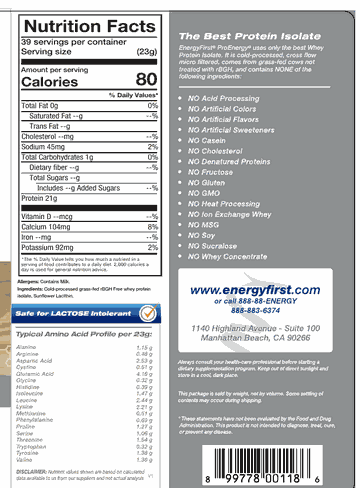
Look for the claim stated plainly on the product page or label — “grass-fed,” “pasture-raised,” “no rBGH/rBST.” If a brand doesn’t make the claim at all, assume conventional sourcing; brands that qualify don’t tend to stay quiet about it. Be skeptical of vague geography (“sourced abroad,” “select dairies”) without a named country or region — that phrasing usually means the brand either doesn’t know or doesn’t want to specify, and it’s worth treating that the same way you’d treat an unlisted ingredient.